Pinterest Marketing for Gardening: How to Show Up in Real Searches
For gardening brands and bloggers, Pinterest works best when your ideas show up while people are planning what to plant, buy, fix, or try next.
By Susy Cid · February 5, 2026
Quick answer
How can gardening brands use Pinterest?
Gardening brands can use Pinterest by building around real gardening searches: projects, problems, and seasonal plans. Choose phrases people already search, create boards and pins around those phrases, and send each click to a guide, checklist, product collection, or plan that matches the pin promise.
Key takeaways
The short version before you keep reading.
- Pinterest is search and saving, not posting for its own sake.
- Gardening searches cluster around projects, problems, and seasonal plans.
- Use the same phrase in the board, pin title, description, overlay, and landing page.
- Do not send planning clicks to a generic homepage.
- Pin before seasonal demand peaks, not after the wave has already passed.
Pinterest is one of the easiest platforms to misunderstand in the gardening world. Gardeners are not only browsing pretty photos. They are planning what to plant, when to plant, how to fix problems, what to build, and what to buy. That means your Pinterest strategy needs a search path, not just a collection of nice garden images.
What is Pinterest for in gardening?
Pinterest is search plus saving. People type what they need, save the best options, and come back when they are ready to take action.
A gorgeous garden photo can still work, but on Pinterest it needs a job: teach something, answer a question, show a plan, solve a problem, or help someone choose what to do next.
Instead of asking what to post today, ask what gardeners are already searching for and what you can help them do.
- raised bed layout
- shade perennials
- tomato leaves yellow
- small front yard landscaping
- companion planting chart
Which gardening searches should you show up for?
Indoor plant wall
Indoor plant wall is a year-round planning topic. People are often reorganizing spaces, looking for hanging plants, wall planters, shelves, hooks, grow lights, and styling ideas.
- Product brands can point to wall planters, indoor pots, shelves, hooks, and grow lights.
- Bloggers can create setup guides, styling ideas, care tips, and best-plants lists.
Small front yard landscaping
Small front yard landscaping tends to spike around spring and early summer. This is project-planning behavior, where people want ideas they can use quickly.
- Product brands can connect edging, mulch, pavers, planters, screens, and irrigation to front-yard refresh ideas.
- Creators can build layout guides, low-maintenance plans, cottage garden ideas, and privacy landscaping posts.
DIY greenhouse plans
DIY greenhouse searches happen before build season. If you publish and pin this content too late, you may miss the planning window.
- Product brands can support greenhouse kits, panels, shelving, seed-starting supplies, heating mats, fans, and thermometers.
- Creators can publish build walkthroughs, lean-to greenhouse guides, small greenhouse layouts, and organization ideas.
Edible landscaping
Edible landscaping is a strong crossover topic because people want something pretty and practical. It can support product content, tutorials, and planning guides.
- Product brands can connect plant starts, raised beds, soil, compost, herb planters, garden markers, and drip irrigation.
- Creators can build edible landscape layouts, front-yard edible garden ideas, and beginner-friendly planting plans.
Companion planting
Companion planting is predictable and seasonal. People are not only asking which plants go together. They often want layouts, bed design, and the setup around the plan.
- Product brands can support seeds, raised bed kits, soil, compost, trellises, labels, and garden fencing.
- Creators can publish charts, raised-bed layouts, vegetable garden plans, and cottage garden crossover content.
How do you use Pinterest keywords without becoming an SEO wizard?
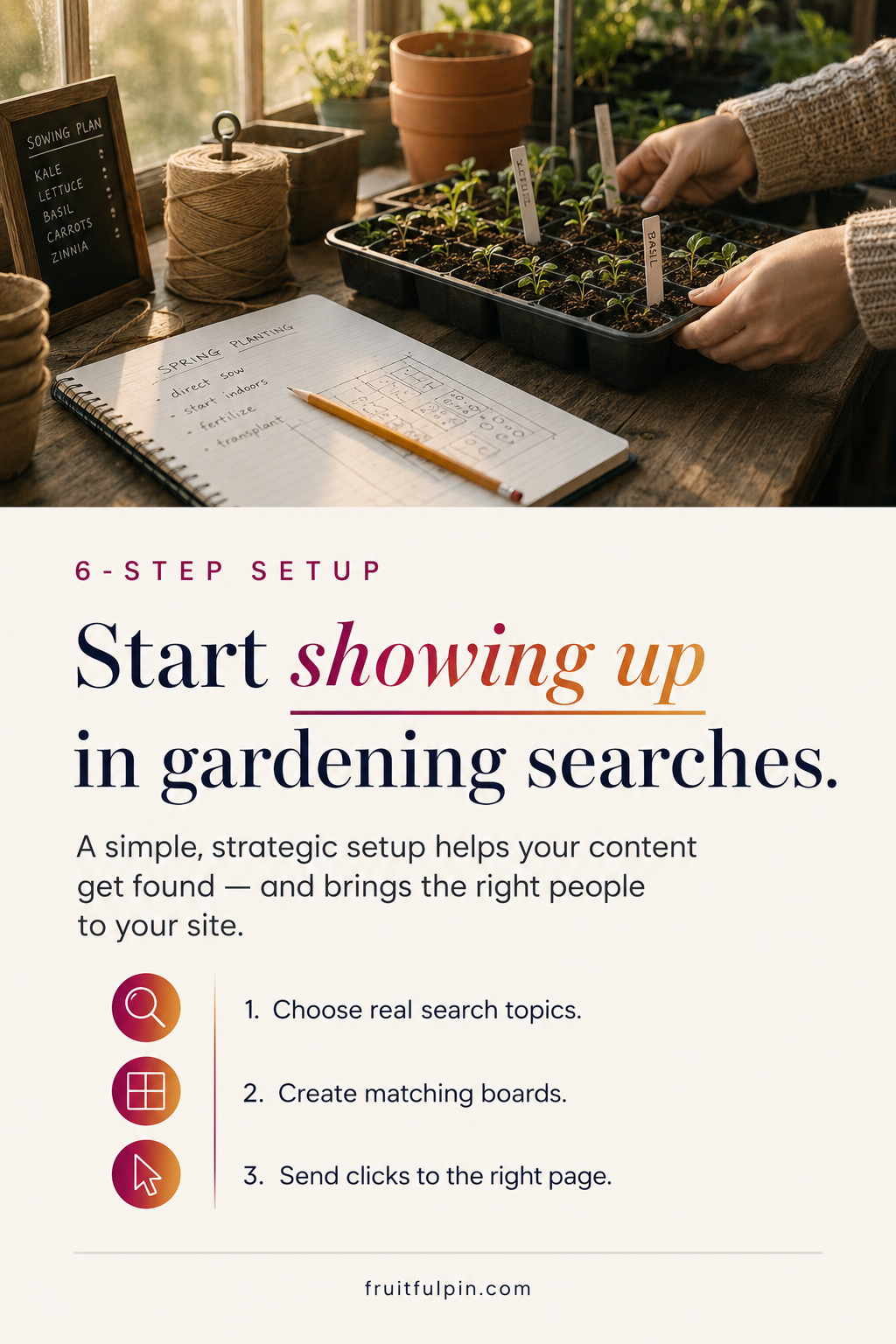
You do not need to master Pinterest SEO. You need a simple system: pick a real search topic, mirror that language in the right places, send the click to the right page, and repeat consistently.
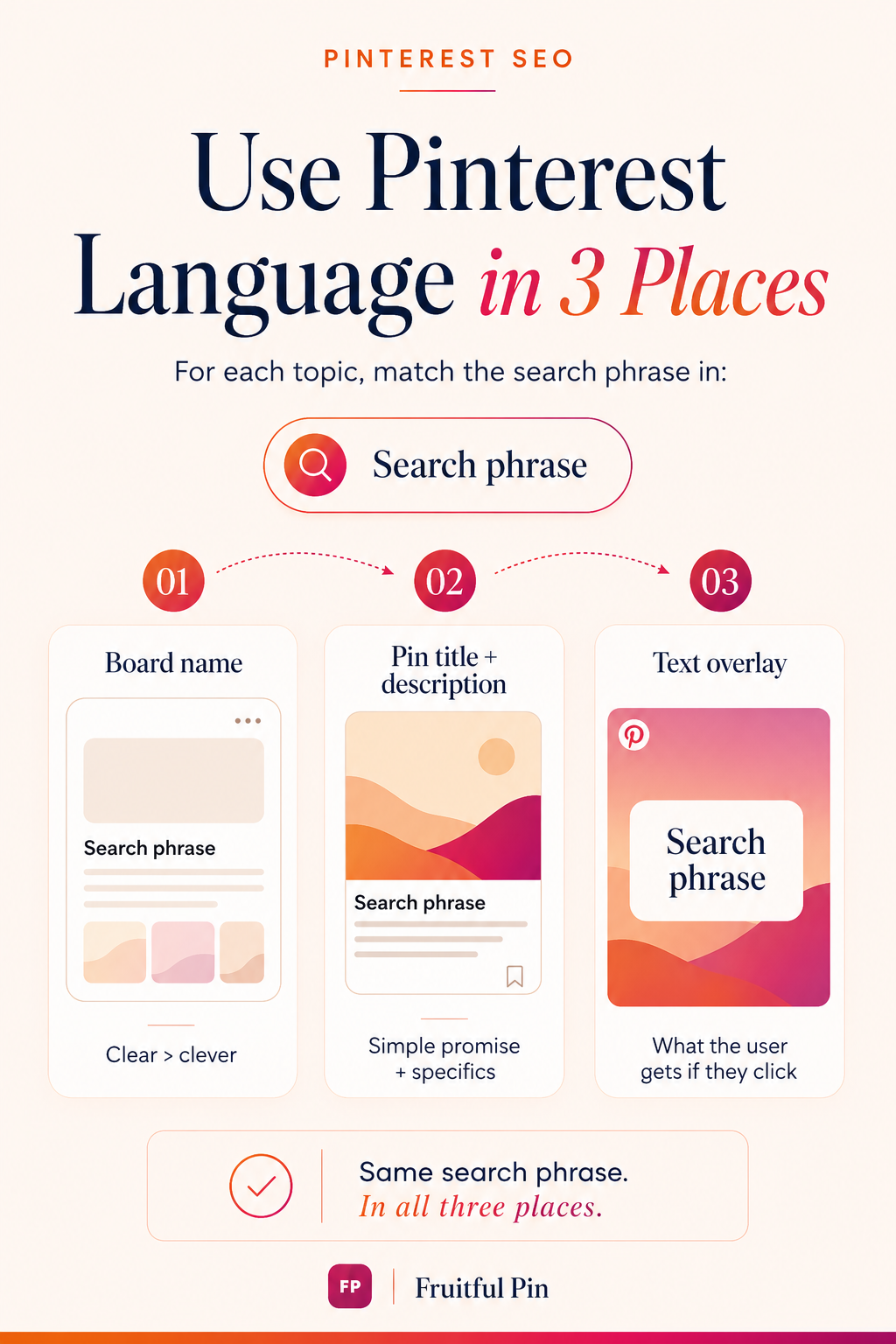
Use Pinterest language in three places
- Board name: clear is better than clever.
- Pin title and description: use a simple promise with specifics.
- Text overlay: show what the user gets if they click.
Make the click have a job
Pinterest traffic is often first-time traffic. Do not dump people on your homepage. Your landing page should match the promise on the pin.
Examples using five real search topics
- Indoor Plant Wall Ideas: send clicks to a setup guide, care tips, or wall planter collection.
- Small Front Yard Landscaping: send clicks to a layout guide or curated front-yard refresh collection.
- DIY Greenhouse Plans: send clicks to a step-by-step plan or greenhouse essentials collection.
- Edible Landscaping Ideas: send clicks to a layout guide, plant picks, or edible starter collection.
- Companion Planting: send clicks to a chart, raised bed layout, or seed and garden supply collection.
What Pinterest mistakes do gardening accounts make?
- Posting random garden content without a clear search home.
- Naming boards like scrapbooks instead of searchable shelves.
- Linking every pin to the homepage instead of a matching guide, checklist, project plan, or product collection.
- Quitting after two weeks because Pinterest did not behave like a fast social feed.
- Overcomplicating the work with tools before building a clear topic map.
How often should gardening brands post on Pinterest?
Pinterest should not feel like a daily performance. Start with a sustainable rhythm you can actually repeat.
The goal is not to flood Pinterest. The goal is to feed your topic map so Pinterest learns what your account is about.
- Plan one or two content sessions per month.
- Create five to ten pins per core topic.
- Post consistently, even if the rhythm is light.
- Refresh and repin ahead of seasonal demand.
How long does Pinterest take to work for gardening content?
Pinterest is a slow oven, not a microwave. The first weeks build signals. Around three months, early winners can start to appear. By six months, compounding becomes more visible when boards, keywords, and landing pages stay aligned.
- First four to eight weeks: Pinterest is learning your topics.
- Around three months: a few pins or pages may begin to stand out.
- Around six months: compounding can feel more real if the path is consistent.
Frequently asked questions
Quick answers before you choose a path.
Is Pinterest good for gardening content?
Yes. Gardeners use Pinterest to plan and save ideas for later. It works best for topics tied to projects, problems, and plans, such as raised beds, greenhouse plans, plant care, layouts, and seasonal checklists.
How do I find real gardening searches on Pinterest?
Start with the Pinterest search bar and autocomplete suggestions, then check Pinterest Trends for seasonality. Your job is to mirror the language people already use and create content that solves that search.
Should gardening brands link pins to the homepage?
Usually no. Pinterest clicks often have a specific intent. Link to a guide, checklist, project plan, product collection, or landing page that matches the pin promise.
What should I post if I sell gardening products?
Match products to planning searches. For example, an indoor plant wall search can point to a setup guide and wall planters. A DIY greenhouse search can point to a materials list and greenhouse essentials.
Want this mapped to your brand?
Start with a Fit Call and we'll look at your content, offer, and Pinterest opportunity without guessing.
Book a Fit Call