Pinterest in 2026 for Product Brands: Pretty Pins Don't Win. Strategy Does.
For product brands, Pinterest works better when pretty creative connects to the questions people ask before they buy, compare, save, or choose.
By Susy Cid · January 17, 2026
Quick answer
Is Pinterest worth it for product brands in 2026?
Pinterest can be worth it for product brands when people already search for, compare, save, gift, style, or plan around what the brand sells. The opportunity is not just making pretty pins. It is showing up earlier in the buying path with search-aligned creative, useful product pages, and a clear next step.
Key takeaways
The short version before you keep reading.
- Pretty pins are not a strategy by themselves.
- Product content needs a clear search and shopping job.
- The real opportunity is connecting discovery to pages that help people decide.
- Pinterest works best when the pin, keyword, product page, and next step feel connected.
- Organic Pinterest and ads can work together once the offer path is clear.
A product can be beautiful, useful, and well-priced and still disappear on Pinterest if the strategy stops at design. In 2026, product brands need pins that help people understand why the product matters, when to use it, and what to do next after the click.
Why are pretty pins not enough for product brands?
Pretty creative helps people stop. Strategy helps them understand why the product belongs in their life.
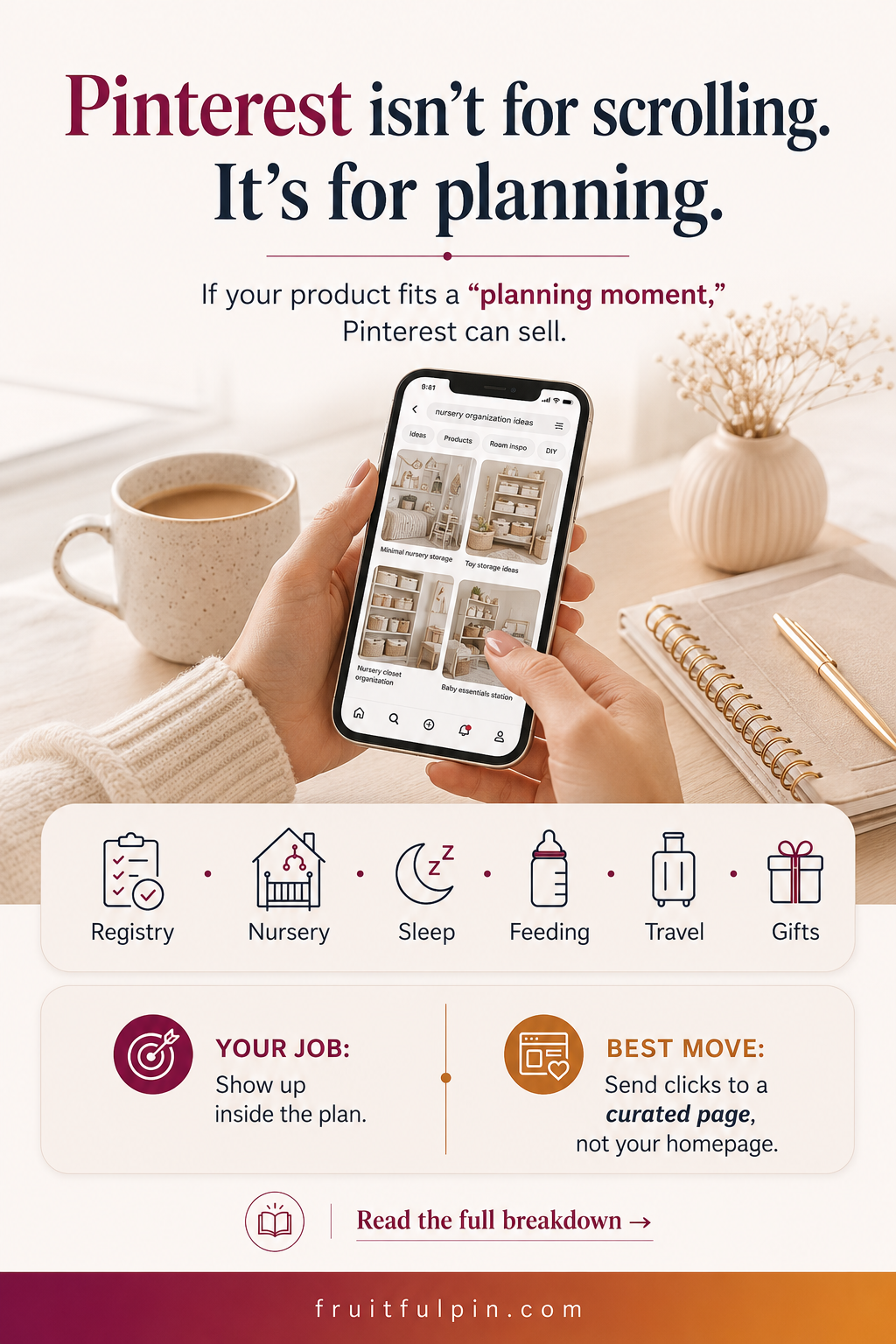
Pinterest users often arrive with a plan already forming. They may be looking for a gift, comparing options, solving a small problem, planning a room, choosing a routine, or saving ideas for a later purchase.
If your pin looks nice but does not connect to that planning moment, the user may save the idea and still choose another brand.
What should product brands build before posting more pins?
Before making more Pinterest graphics, product brands need a simple map of what buyers are already trying to do. That map should connect search phrases, product categories, content angles, and the pages worth sending traffic toward.
- Search topics tied to product use cases, gifts, routines, rooms, seasons, or problems.
- Boards that organize products and ideas in language buyers actually use.
- Pin creative that shows the product in a clear context, not just as an isolated object.
- Product, collection, guide, or opt-in pages that match the promise on the pin.
- Tracking that helps the business learn from saves, outbound clicks, signups, and purchase signals.
How should product pins guide the buyer?
A strong product pin does more than show the item. It gives someone a reason to imagine it, compare it, choose it, or come back to it when the timing is right.
That can mean showing the product in use, grouping it into a gift idea, explaining the problem it solves, or placing it inside a seasonal or lifestyle moment.
Examples of product-led Pinterest angles
- Gift ideas for new moms
- Small bathroom storage ideas
- Healthy snack ideas for busy mornings
- Travel packing essentials
- Baby sleep products for a calmer bedtime routine
What the landing page needs to do
The page after the click should keep the same promise. If the pin says gift guide, the page should feel like a guide. If the pin promises a comparison, the page should help someone compare.
Where do organic Pinterest and ads fit for product brands?
Organic Pinterest helps build the searchable product library. Ads can speed up distribution when the offer, landing page, and tracking are ready enough to learn from paid traffic.
The mistake is treating ads as the fix for unclear positioning or treating organic as a random posting calendar. Both need the same strategic path.
- Use organic to test product angles, search language, and evergreen discovery.
- Use ads to amplify a clear collection, offer, lead magnet, launch, or seasonal push.
- Use reporting to decide which topics, pages, and creative angles deserve more attention.
What should product brands measure on Pinterest?
Monthly views alone will not tell you whether Pinterest is helping the business. Better reporting looks at how people move from discovery toward a meaningful next step.
- Which searches and topics are earning saves or outbound clicks.
- Which product categories are getting the most qualified attention.
- Which pins create traffic to useful pages, not just impressions.
- Which pages hold attention, collect email, or support purchases.
- Which creative angles should be refreshed, expanded, or promoted.
What is the bottom line for product brands on Pinterest?
Pinterest can help product brands get found earlier, but only when the work is connected to how people plan, compare, and buy.
Pretty pins can open the door. The strategy behind them is what helps the right people understand, remember, and choose your brand.
Frequently asked questions
Quick answers before you choose a path.
Can Pinterest help product brands sell more?
Pinterest can support product sales when people already search for ideas, products, gifts, routines, or solutions related to what the brand sells. The pin needs a clear search angle and the landing page needs to make the next step easy.
Should product brands use Pinterest ads right away?
Not always. Ads make sense when the offer, landing page, creative direction, and tracking are clear enough to learn from paid traffic. If the path is blurry, build the organic and page foundation first.
What should a product pin link to?
A product pin should link to the most relevant destination for the promise on the pin: a product page, collection, gift guide, comparison, tutorial, or email opt-in.
What makes Pinterest different from Instagram for product brands?
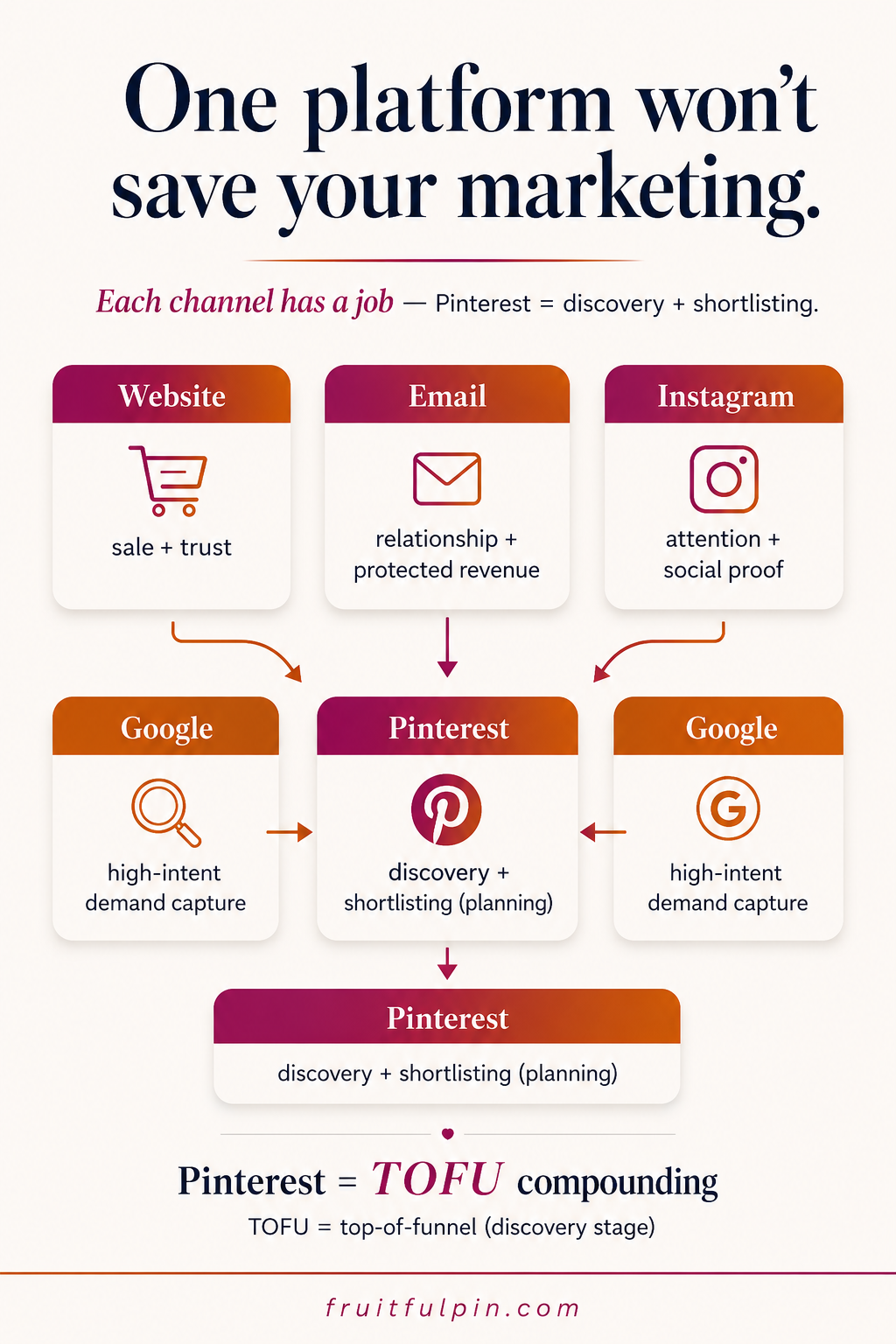
Pinterest is built around search, planning, and discovery. People use it to find ideas and products before they decide. Instagram is more feed-driven and relationship-driven.
Want this mapped to your brand?
Start with a Fit Call and we'll look at your content, offer, and Pinterest opportunity without guessing.
Book a Fit Call